Blog

Guide: How to Comply with the Archives Act (Archiefwet 2026)

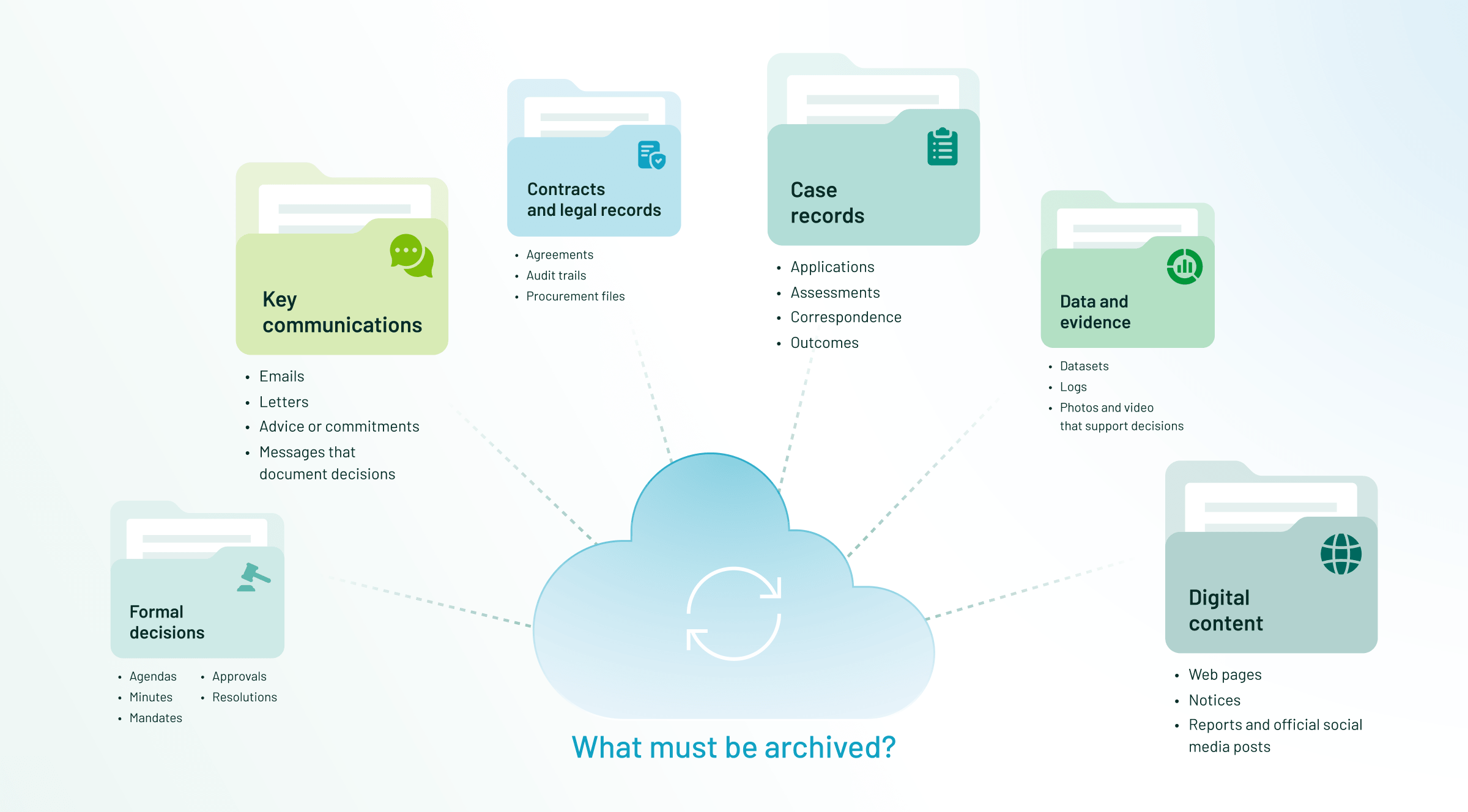
On 1 January 2027, the Archiefwet 2026 replaces the Dutch Archives Act of 1995. That is only months away, and it is no longer a target date. The Eerste Kamer approved the bill on 12 May 2026 and the act was published in the Staatsblad on 19 June 2026, which formalised both the citation title and the commencement date. The 1995 act was written for a paper reality. Today, emails, chat messages, collaboration files and datasets together form your organisation's institutional memory. The new act reflects that and requires you to manage digital information sustainably from the moment it is...

The Digital Meetings Act: What Dutch Councils Need to Know

In the Netherlands, the Temporary Act on Digital Deliberation and Decision-Making provided the necessary legal basis for digital decision-making at a time when it was not possible to hold physical gatherings. Now that law has expired, the Tweede Kamer has adopted a permanent replacement – the Digital Meetings Act.  At the time of this writing, the Senate still needs to scrutinise and vote on the bill. However, if it becomes law, it will provide a permanent legal basis for decentralised authorities to hold meetings and vote electronically during exceptional circumstances. Where it is not possible to hold a physical meeting...

Compliance Accountability Statements: The Challenges for Dutch Councils

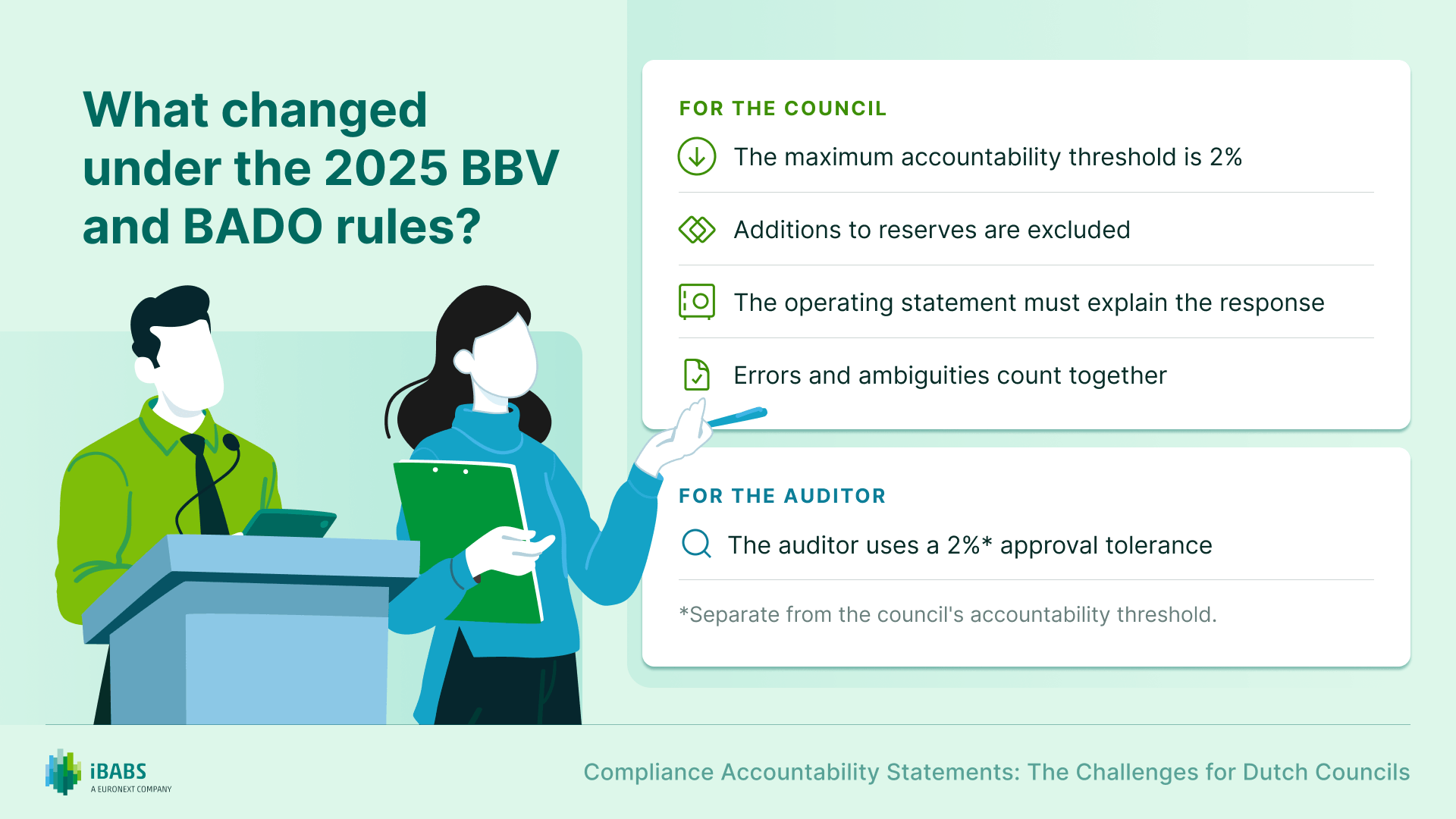
Since the 2023 financial year, under Wet versterking decentrale rekenkamers, Dutch municipalities have been obliged to include a statement in their annual accounts explaining whether their income, spending and balance-sheet transactions followed the relevant financial rules.  However, only 37% of the Dutch municipalities assessed in a 2025 report concluded that their financial activities were compliant, down from 45% the previous year. The same research found that none of the 86 municipalities studied used the required accountability model correctly: These findings suggest that the compliance accountability statement for local government has exposed weaknesses in financial controls, procurement, budget management and the...

How to Measure Community Engagement Effectively

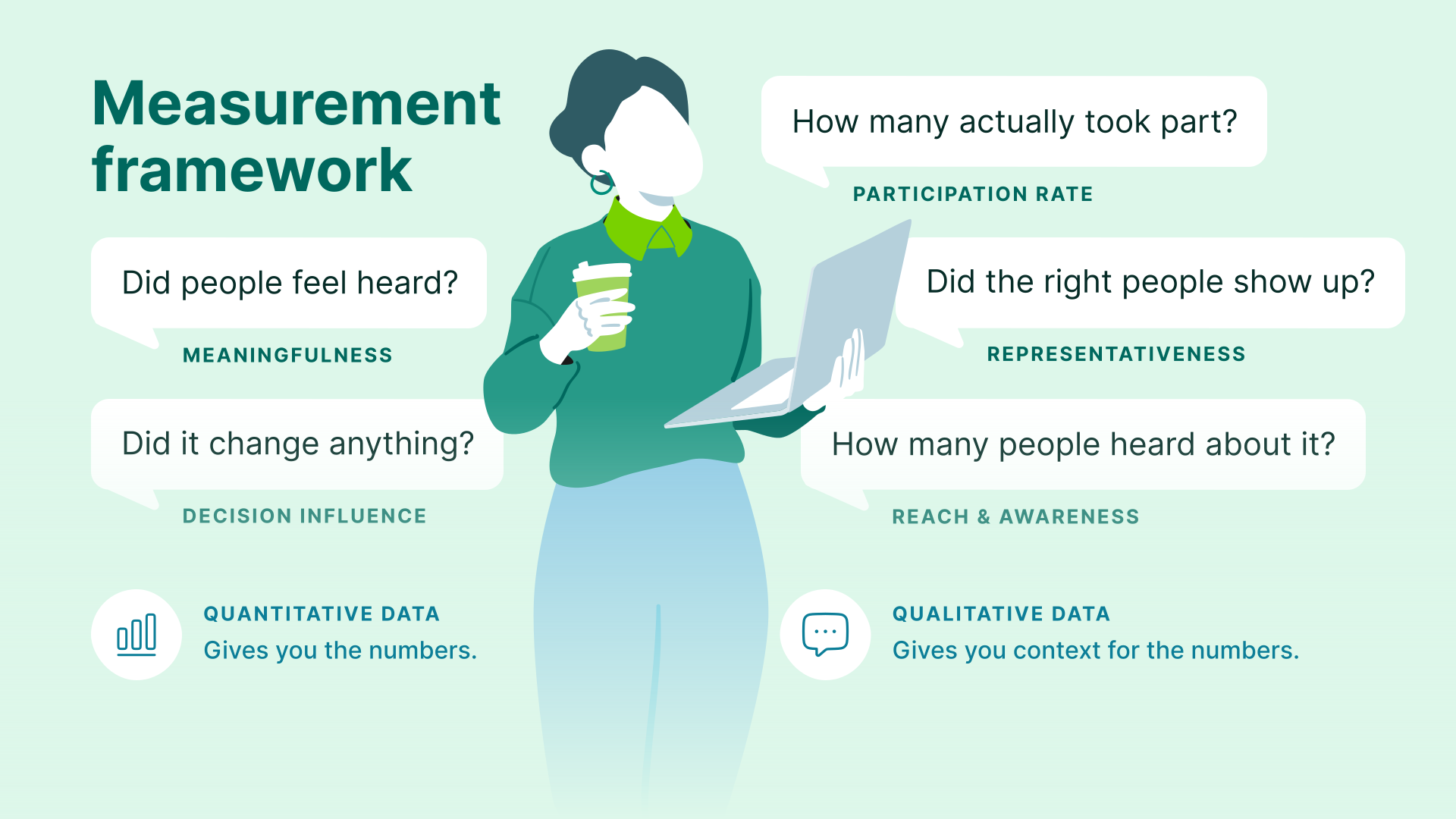
The Organisation for Economic Co-operation and Development (OECD) found that having a say over the actions of governing bodies increases trust in those bodies by 3.1%. However, less than half of Dutch citizens (39%) believed they were able to contribute to decision-making.  The current status of participation in Dutch municipalities is mixed. For example, in Leiden in South Holland, around 10% of citizens engage in decision-making. However, this tends to skew towards residents from wealthy neighbourhoods.  To increase engagement, the Dutch government has introduced laws, such as: Whilst citizen participation brings the benefits of a more trusting and constructive relationship...

Participation Regulation 2027: What Dutch Councils Must Prepare

Civic participation can be beneficial to both residents and municipalities and other public bodies. The European Commission reports that it can improve resource efficiency and build transparency, whilst fostering “inclusivity, ensuring that all voices are heard in decision-making processes. It builds public trust in government institutions by providing residents with the opportunity to directly influence decisions that affect their lives.” However, there is evidence that many citizens do not engage in the democratic process. In the municipality elections in 2026, turnout stood at 53.75% of eligible voters. Nearly half of the electorate did not vote, despite the outcome having a...

What is AI Governance and How Does it Affect the Board of Directors?

Artificial intelligence has become a common feature of the workplace. McKinsey found that 88% of organisations regularly used AI in at least one business function by the end of 2025. This was up from 78% a year previously.  However, only a third of companies have begun scaling AI across the entire business, despite 64% confirming that it has enabled innovation. One reason for this could be that the rise of AI has been rapid and, although it brings multiple benefits, there are also risks inherent with trusting large language models, machine learning and smart automation platforms with complex and impactful...

Taking back an hour a day: time management for assistants, with Abigail Barnes

Assistants spend their days protecting other people's time. Their executive's calendar gets defended fiercely. Meetings start on the dot. Deadlines are tracked, reminders sent, diaries organised into shape. And yet, ask most assistants when they last felt in control of their own time, and the answer is usually a rueful laugh. That's the paradox Abigail Barnes set out to solve. As a time management author and international speaker, Abigail has built a career around a simple idea: the tools that help executives run their day can work just as well for the person running theirs. In this video series, she...

Rethinking the role of the assistant: insights from Lucy Brazier

The role of the executive assistant has changed more in the last decade than in the fifty years before it. Middle management has thinned out, AI is absorbing routine tasks, and remote work has redrawn how executives and their assistants actually work together. So what does the modern assistant role look like — and where is it heading? To explore exactly that, we sat down with Lucy Brazier, CEO of Marcham Publishing and one of the most recognised voices championing the profession worldwide. In this short video series, Lucy shares a refreshingly direct view on where assistants add real value,...

Popular posts

iBabs Meeting Assessment
envelope

iBabs Meeting Insights

Join over 24,000 professionals on the Meeting Insights email list to get updated to the latest on meeting management. All our tips and tricks delivered to your inbox.