
A 2024 Local Government Information Unit (LGIU) survey of English citizens found that only 43% trusted local councillors to work in the best interests of local people and that 62% wanted greater insight into how councils took decisions. These results feed into each other. The more we know about the processes involved in converting our local taxes into services for the community, the more we can trust those processes are carried out with the right intentions.
Transparency over decision-making and service delivery allows the public to hold local government organisations accountable for their actions. In turn, this encourages councillors to give greater scrutiny to their prospective actions, ensuring that they are fair, value-for-money and in the interests of the local community.
This article explores the importance of accountability in local government and provides practical advice on how to achieve it.
Key takeaways
- With only 43% of citizens saying they trust councillors with service delivery and 62% wanting more insight, councils must make decision processes visible to rebuild trust through accountability.
- Proactive accountability mechanisms, such as the publication of agendas, minutes, votes and decision logs in accessible formats, enables public scrutiny and demonstrates the value delivered to the community.
- Meaningful citizen participation, from consultations to participatory budgeting with “you said, we did” feedback, strengthens legitimacy and improves outcomes.
- Robust governance structures for oversight, evidence packs for key decisions, action tracking and compliance monitoring keep decisions lawful and focused on the public interest.
- Strong ethical standards, including codes of conduct, conflict registers, regular training and protected whistleblowing, reduce corruption risks and protect councils and staff.

Why accountability is important for local government
- Builds public trust: Without public accountability mechanisms, community members cannot be sure that decisions have been taken in their best interests, rather than in the interests of those in power. The Netherlands’ Open Government Act (Woo) requires government bodies to publicly disclose documents such as meeting agendas and minutes that reveal the decision-making process. This allows the public to hold leaders to account.
- Ensures responsible use of public funds: By being open with the public about the council’s accounts, councillors understand that their use of funds will be scrutinised for value for money with relation to service delivery. In Birmingham in the UK, there was little local governance accountability taken over the use of the city council’s budget, leading to the council being declared bankrupt, based on misstated and unaudited figures.
- Supports lawful, transparent decision-making: All decisions take place in the public eye when you implement local government accountability. This compels them to consider the reasons behind every action they take and whether they fit within a suitable legal framework. In the words of the European Court of Auditors: “Transparency gives citizens the information they need to hold public decision-makers to account.”
- Reduces risk of corruption and mismanagement: Malpractice and other negative outcomes can occur where there is not a process whereby councillors are held adequately to account. The Electoral Reform Society found that where local councils are dominated by a single party, it can lead to waste of as much as £2.6 billion (€2.9 billion) per year and a 50% increase in the chances of corruption. This demonstrates the importance of placing accountability on those in charge.
- Protects the council and its employees: When local government employees create auditable records with independent oversight, it reduces the opportunity for misconduct and helps catch errors early, before they cause a crisis. These accountability mechanisms also provide evidence that you can use in response to decision challenges. In the Netherlands, the Municipality Act obliges audit offices and audit committees to report their findings and judgements to the council, adding recommendations and disclosing them to the public at the same time. This allows municipalities to publicly ‘put right’ issues to protect themselves from potential crises.

We offer a smooth and secure transition from your old tool with full support for historical data transfer and training for your team to ensure you can use iBabs to the fullest. You will also gain access to all features when you sign up; there are no additional tiers to buy into.
How to improve accountability in local government
Improve transparency and access to information
The more transparent your council is over the way it runs its service delivery, the easier it will be to improve accountability. When the public, journalists and other council members are able to access information about your meetings, decisions and procedures, they can ensure your councillors meet the high standards expected of them.
The new act in the Netherlands (Woo) is in the process of making this an obligation for government bodies under its jurisdiction, but it is also beneficial for any council in any location to create a public portal that allows external parties to browse relevant information.
Create a local governance section on your website dedicated to transparency as part of your accountability mechanisms. Make sure you report on your processes in a consistent manner and publish documents in an easily accessible, searchable and readable format. This way, people can find out exactly how you manage budgets and where your current spending stands, how you carry out public procurement and award tenders, as well as a range of other processes that build trust when presented in a transparent manner.
| Simplify accountability with iBabs iBabs Publish is an essential tool for transparent public democratic governance. It allows you to share agendas and meeting minutes, decision records and voting results, as well as important documents and open letters. Users can browse your archives and access the information they need, improving accountability for your council. Learn more |

Increase citizen participation
The LGIU survey found that a significant number of citizens wanted more say in local government decision-making. Increasing citizen engagement is an effective way to improve accountability because you open up your processes to those who participate, build communication lines with the public and work together to shape a successful future.
Citizens fund the council and its public services through taxes and choose their representatives at elections, so it makes sense to work closely with them to have them review actions and decisions, and hold council members accountable for the success of their strategies.
Create channels through which community members can communicate with the council, whether that be for making comments, providing feedback or lodging complaints. The system needs to meet accessibility standards, particularly in the Netherlands, where it is a legal requirement under Wet digitale overheid (Wdo). You also need a process to receive, review and answer public input in a timely manner that successfully addresses their requirements.
Other methods for increasing citizen engagement include introducing participatory budgeting, holding online or in-person forums and live streaming council meetings with a section dedicated to public contributions.
Enable effective oversight
Accountability mechanisms should be embedded within the organisation, putting clear structures in place to scrutinise the work of the council in running public service delivery. Create an audit committee that mixes council members and relevant individuals with the skills and expertise to dive deep into the work of the local government organisation. It should have the power to call for all necessary documents and to interview any council member when needed.
Ensure that all key decisions are backed with an evidence pack, featuring details of how they were discussed and the voting records that brought them to fruition. You should also monitor all action items to ensure that decisions turn into tangible change. This includes making sure that all such actions are recorded on your public register, too.
Assign a person or team to monitor compliance requirements and legislation change from the national government that could affect local government procedures. Run policy reviews to be certain that current processes are still fit for purpose and that you are ready for any changes that are due to take place.
Set key performance indicators (KPI) for your audits and report them publicly, along with any recommendations for improving your oversight.
Establish strong ethical standards
The behaviour of those in office forms a central pillar of accountability. When your decisions affect the lives and livelihoods of so many people, it is essential that they are taken in an ethical manner that puts the interests of the public ahead of anything else. This is why it is essential for accountability that you promote ethical behaviour at every step. Create a code of conduct and enforce it at all times.
Within the code, introduce a conflict of interest register that all decision makers must sign. In that, they list all of their outside interests so that you can easily see if a vote or discussion is coming up in which they might not be able to be truly independent. They should also agree to flag any new conflicts of interest that arise before they take part in decision-making, with dissuasive sanctions for failing to do so. Otherwise, people could question the legitimacy of the council’s actions.
Provide ongoing ethics training to help council members maintain fairness and introduce a whistleblowing channel to allow councillors and other employees to report contraventions of your code of conduct in confidence.
Challenges to accountability in local government
| Challenge | Solution |
| Lack of resources | Prioritise high-impact accountability mechanisms that increase transparency. You can also standardise templates for the documents you share and automate routine publishing to cut the time spent by your team. Build a simple business case that links time saved and fewer FOI requests, for example, to justify a small investment. |
| Resistance to change | Involve councillors and officers early, run short role-based training and showcase quick wins from pilot projects so they understand the benefits. Name digital champions in each service to model the new way of working. |
| Limited citizen participation | Use mixed channels (online, in-person and mobile) with plain-language summaries and “you said, we did” feedback. Offer small incentives and schedule sessions at times when people are more likely to be free. Choose accessible venues in a range of locations to bring in underrepresented groups. |
| Political interference | Set clear decision protocols, publish evidence packs and conflicts of interest and minute recusal statements. Give the audit committee independence, a public work plan and follow-up tracking for recommendations. |
FAQ
What is the role of the media in holding local government accountable?
The media shines a light on decisions, spending and conflicts of interest so the public can see how power is used. Good reporting asks difficult questions, checks facts and keeps stories alive until problems are fixed.
How do you build accountability in a small team?
Set clear goals and roles with accountability mechanisms for small teams. Write down decisions and deadlines and review progress in short regular check-ins. Keep records in one shared place so anyone can see what was agreed and what is due.
What are some common signs of corruption in local government?
Unusual service delivery contract awards to the same firms every time, poor or missing records, rushed decisions with little scrutiny and officials not declaring interests are all signs that there might be corruption within your team. Whistleblower complaints, audit red flags and patterns of gifts or favours are also warning signs.
Conclusion
Accountability in local government is essential for gaining the trust of your citizens and running an efficient and effective council. By being transparent with your decision-making and service delivery processes and working with the public to create a model of engagement, you bring your community members closer to your work and allow them to see how you make and action decisions.
How iBabs helps
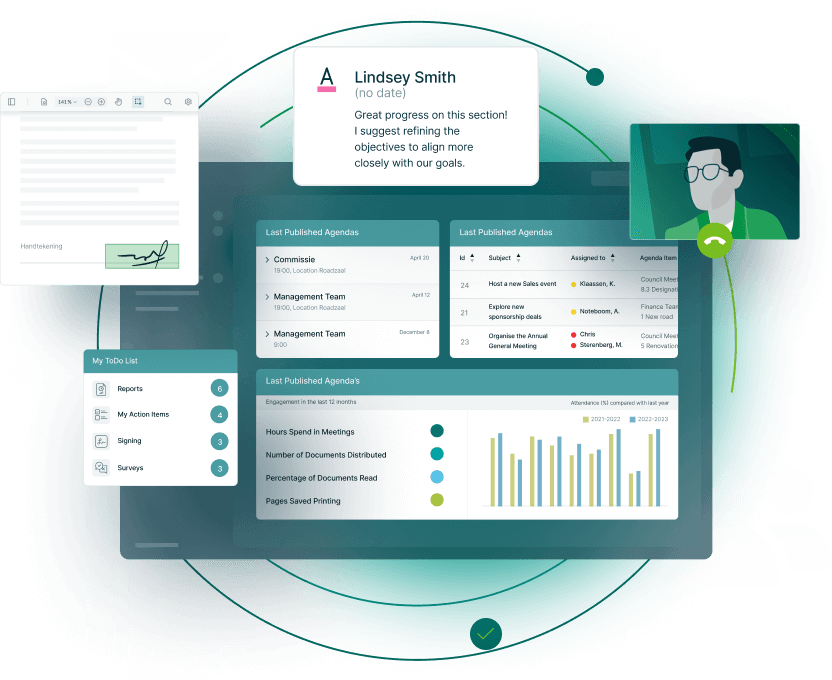
iBabs Publish is a public portal that displays all the information about your processes your citizens need. It updates with meeting materials, documents and voting records you make public to allow citizens to find relevant data in an open and transparent manner. You can also live stream your meetings and maintain compliance with legislation, such as Woo in the Netherlands. iBabs Publish integrates seamlessly with the iBabs meeting management platform.

