
In its 2025 Report on Citizen Engagement and Participation and Local Governance in Europe, the European Association for Local Democracy (ALDA) examined the importance of government bodies working together with community members. It states that “effective local governance and meaningful citizen engagement are essential to ensuring that democratic systems remain responsive, inclusive and trusted.”
This is especially relevant when, as the EU’s Community Research and Development Information Service (CORDIS) reports, “In Europe, there is growing disaffection and a lack of trust in democratic processes, driven by widening inequalities and anxieties concerning social, economic and cultural change.”
CORDIS quotes James Scott, a professor in the Faculty of Social Sciences and Business Studies at the University of Eastern Finland, who said “Working towards such a future, cities might want to consider actions that address structural barriers to participation, build relationships of trust, and most of all, make decisions for the long term. The main aim of local governance should be to stimulate an inclusive decision-making process that results in practicable decisions.”
This article explores community engagement best practices that will help your government body build trust with your community members and design solutions to local issues that work in the best interests of those that they most impact.

Key takeaways
- A community engagement strategy for local government makes for a more responsive democratic system that works for its community members.
- Transparent, plain-language communication and open decision records are vital to addressing growing disaffection with governing bodies across Europe.
- Councils improve decision quality when they replace one-way announcements with meaningful dialogue through meetings, outreach and surveys that feed into real choices.
- Publish impact results, enforce ethical standards and use independent oversight to scrutinise decisions and spending and to instil accountability into local government.
- Councils should partner with local organisations and recognise community contributions through social media and other communications, turning engagement into shared delivery.
- Practical models like participatory budgeting, citizens’ assemblies, focus groups and open government action plans show how councils can turn engagement into longer-lasting initiatives.

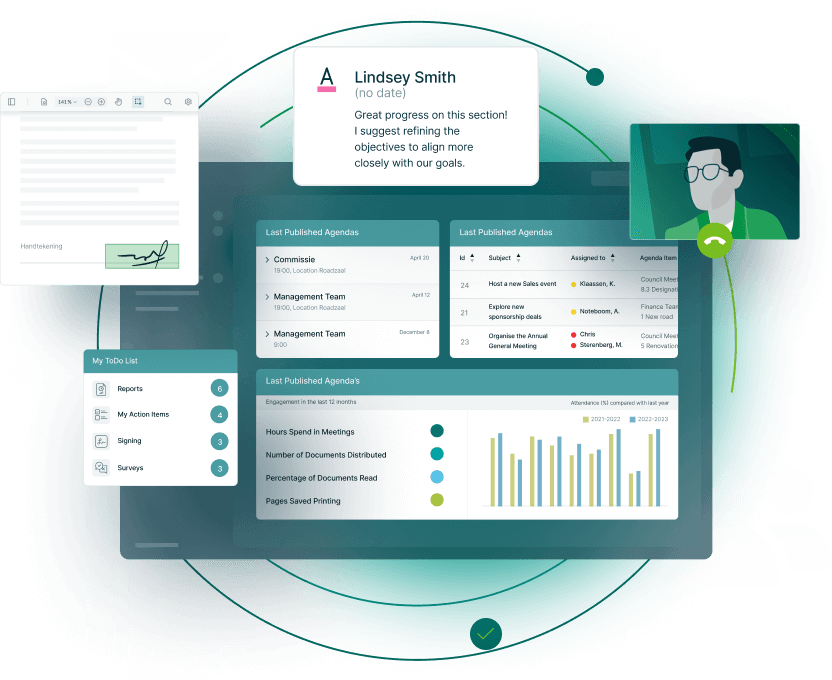
In this fast-paced world, you need a meeting management solution that is simple, efficient, and incredibly easy to use. With iBabs, you can manage the entire meeting process on a single platform.
Four community engagement best practices for the modern council
1. Build transparent and honest communication
Much mistrust of public organisations stems from a lack of transparency. Where people cannot see clearly why and how local government bodies make decisions, it leaves room for rumour and speculation. Even when there is communication, if it is vague or uses a lot of jargon, citizens may feel that the government body is trying to avoid scrutiny.
If you want to engage community members and groups to help create innovative solutions to problems, you must be open, honest and transparent. In practical terms, this means:
- Using clear and relatable language in all public communications. When you address the community, you must make the messaging accessible for the widest range of recipients so that people can understand what is happening and how it impacts them.
- Be honest and open about the reasons behind your decisions so that, even if citizens disagree with them, they can understand they were taken in good faith and with rigorous discussion and reasoning. Upload your meeting agendas and minutes to a public portal, allowing the community to access details of the process that led to every decision.
- Provide regular updates regarding projects to show that you are working on bringing them to fruition. When there is silence, citizens can become concerned that you have quietly discarded the plans or that there is something wrong. If there is a delay, be transparent about it and promise to keep people informed. By working with community groups to communicate these updates, you maintain trust.
In the Netherlands, the Open Government Act (Woo) will mandate governing bodies to provide public access to government data and documents. This will improve community engagement efforts through additional transparency.
2. Encourage meaningful dialogue
Effective local government communication is not a one-way process when it comes to community engagement. If you want to engage the community at a grassroots level, you need to engage in dialogue. Ask citizens what matters to them, what their concerns are and how they feel you are able to improve their lives. This not only makes the community feel heard, but it also provides a platform to crowdsource ideas that could make a significant positive impact on your local area.
Host public meetings, focus groups and community outreach sessions, ensuring you hold them in safe and respectful discussion spaces. Listen actively to what community members are saying, whether it is positive or negative. It is important to know what the community is thinking. Respond thoughtfully to their points and suggest ways you can turn their feedback into positive action or offer routes to escalate their input.
Send out surveys and ask questions on social media to gain offline and online community feedback and analyse responses to understand what is working and what needs improvement.
3. Demonstrate trust and accountability
A 2024 survey in England found that only 43% of citizens trusted their local government representatives to work in the best interests of the community. As elected officials, you cannot take public trust for granted. You must earn it through demonstrating accountability for your decisions and actions. As part of your community engagement strategy, show what you are doing to build trust.
To achieve this:
- Invest in impact reports to show the success or otherwise of your decisions. Publish them on your website so community members can access them and be open about what worked and didn’t. You can add context to projects that have underperformed and set out how to rectify them, but do not just hide or bury information that might be detrimental. Take responsibility.
- Create a code of conduct, including a conflict of interest policy, that provides ethical standards for all council members to abide by. In addition to ethics training for your internal stakeholders, this will help you maintain fairness within your council decision-making processes.
- Develop an audit committee that can oversee the activities of the local government body. It should have the power to analyse all council documents and interview members, setting audit KPIs and reporting them publicly alongside recommendations for service improvements.
- Address criticism constructively by showing how the council will resolve problems, maintaining respectful dialogue with complainants.
4. Build collaborative relationships
Community outreach is essential to connect the work carried out by the council with a real, tangible difference on the ground. As active as council members might be on the streets, they can be much more effective when they engage citizens and work together to bring about positive change.
Partner with local organisations, community advocates, volunteers, leaders and other community members. Engage with these community stakeholders who are willing to give their time to work on behalf of their fellow citizens and decide what the community urgently needs and how best to make it happen. These community champions are at the heart of the action and would welcome the additional resources and exposure you can bring to the work they are already doing.
Recognise and celebrate the contributions of the community in your social media feeds, on your website and in publications. By publicly acknowledging community engagement participation and collaboration, you show how much it is valued and encourage others to take part for the good of the local area.
Community engagement examples for councils
- In Finland, Helsinki’s council implemented OmaStadi in 2024, a participatory budgeting scheme whereby residents of 13 years and over proposed projects to improve the city. Citizens voted on the projects they wanted to see come to fruition, with the council allocating €8.8 million to bring to life those that received the most votes. The city also consulted residents on how to bring about the winning proposals.
- The Municipality of Bologna in Italy held a citizens’ climate assembly between May and November 2023, during which 80 residents and 20 regular visitors to the city undertook education on climate topics and heard from experts in the field. They then formulated, debated and discussed proposals to implement in Bologna to tackle the climate crisis. Of 120 proposals, the city fully or partially approved around half.
- Between 2024 and 2025, the Portuguese capital of Lisbon created an Open Government Partnership action plan aimed at improving accountability and preventing corruption through public participation. One key element was to encourage community engagement and participation in the design, implementation and assessment of public policies and measures.

Why community engagement matters for councils
- Strengthen trust and credibility: Where citizens can see how and why you make decisions through your community engagement strategy, they are less suspicious and you reduce the risk of misinformation spreading. Where residents can ask questions, challenge decisions and see that you are following through, they are more likely to trust your process, even if they disagree with your outcomes.
- Improve decision-making through community input: Residents often spot practical issues that do not show up in reports, like how a change affects traffic at school times or whether a service works for people with limited mobility, for example. Engagement brings local knowledge into the process early, helping the council prioritise what matters most.
- Build long-term relationships with the community: Ongoing engagement is preferable to one-off consultations. Having regular touchpoints with clear paths between what is said and what happens builds strong partnerships with community groups, businesses and residents. The resulting shared understanding of local priorities helps streamline the process of creating projects that make a real difference.
- Create more sustainable and accepted initiatives: Community members are more likely to support and protect projects they helped shape, which reduces pushback and delays. Early engagement can reveal any risks and unintended consequences in your plans so you can adjust your plans before investing time and money. This leads to initiatives that last longer and deliver better outcomes.
FAQ
How do you measure successful community engagement?
Here are some ways of understanding how successful your community engagement strategy has been:
| What to measure | How to use it |
| Key performance indicators for engagement | Track KPIs per project and compare across quarters to spot what works and where engagement drops. |
| Qualitative vs quantitative metrics | Use numbers to monitor reach and consistency, then use qualitative input to improve how you design consultations. |
| Monitor sentiment and trust levels | Run short pulse checks with community members before and after major decisions and track the changes, not just one-off scores. |
| Evaluate long-term impact | Review a project’s impact six to 12 months later and publish a “what we learned” update to inform citizens and build trust. |
How can organisations rebuild trust with a community after a negative experience?
Acknowledge what went wrong in plain language, share what will change and set a short plan with dates that community members can track. Then ensure you do as you say and offer regular updates and a clear summary of what was said and what you delivered against it.
What role does leadership play in successful community engagement?
Leaders set the tone for your community engagement strategy by showing up, listening without being defensive and making sure the engagement actually influences their decisions. They also provide resources and hold teams accountable for acting on what the community raises.
Conclusion
These community engagement best practices will help you develop close working relationships with your citizens, sourcing innovative solutions from them and displaying accountability that builds trust. A local government body that is transparent and collaborative can better justify its decisions and is more likely to build support from citizens, even when times are tough or things go wrong.
Improve your council’s transparency with iBabs
iBabs Publish creates a public portal on your website that community members can use to see who voted for what resolutions and analyse meeting minutes to understand how the council made decisions.

