Local Authorities and Governments

How to Archive Meeting Records in Compliance with the Archiefwet 2026

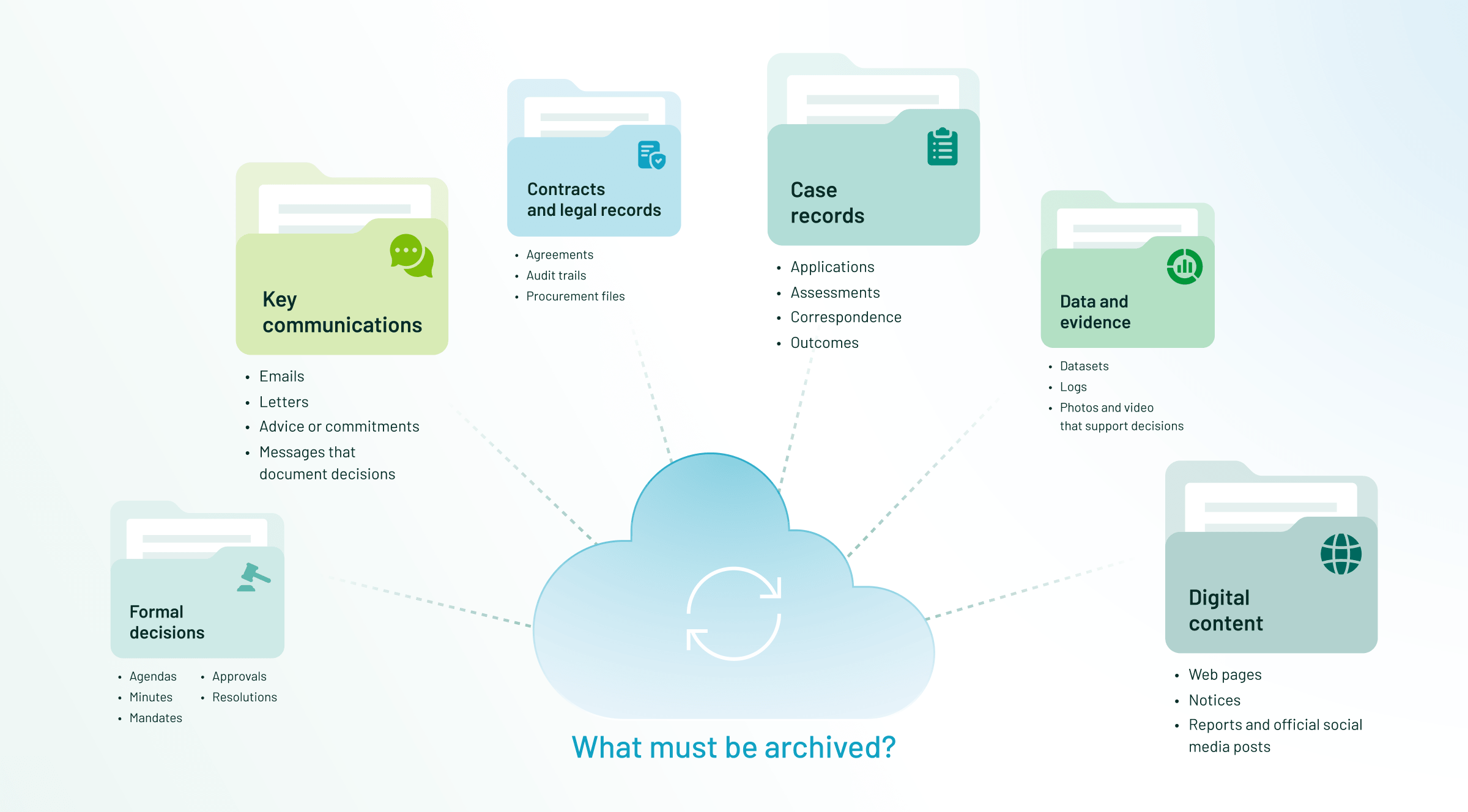
Your council takes a decision. There is a proposal, a debate, amendments and a vote. Ten years from now, someone needs to be able to reconstruct that whole story, in a system that probably will not exist any more. That is exactly what the Archiefwet 2026 asks of you. The act enters into force on 1 January 2027, replacing the Archiefwet 1995. For the clerk's office, the practical consequence is this: agendas, minutes, decisions and supporting papers are not a by-product of the meeting. They are archivable information you have to capture properly from the very first moment. The Archiefwet...

Guide: How to Comply with the Archives Act (Archiefwet 2026)

On 1 January 2027, the Archiefwet 2026 replaces the Dutch Archives Act of 1995. That is only months away, and it is no longer a target date. The Eerste Kamer approved the bill on 12 May 2026 and the act was published in the Staatsblad on 19 June 2026, which formalised both the citation title and the commencement date. The 1995 act was written for a paper reality. Today, emails, chat messages, collaboration files and datasets together form your organisation's institutional memory. The new act reflects that and requires you to manage digital information sustainably from the moment it is...

The Digital Meetings Act: What Dutch Councils Need to Know

In the Netherlands, the Temporary Act on Digital Deliberation and Decision-Making provided the necessary legal basis for digital decision-making at a time when it was not possible to hold physical gatherings. Now that law has expired, the Tweede Kamer has adopted a permanent replacement – the Digital Meetings Act.  At the time of this writing, the Senate still needs to scrutinise and vote on the bill. However, if it becomes law, it will provide a permanent legal basis for decentralised authorities to hold meetings and vote electronically during exceptional circumstances. Where it is not possible to hold a physical meeting...

Compliance Accountability Statements: The Challenges for Dutch Councils

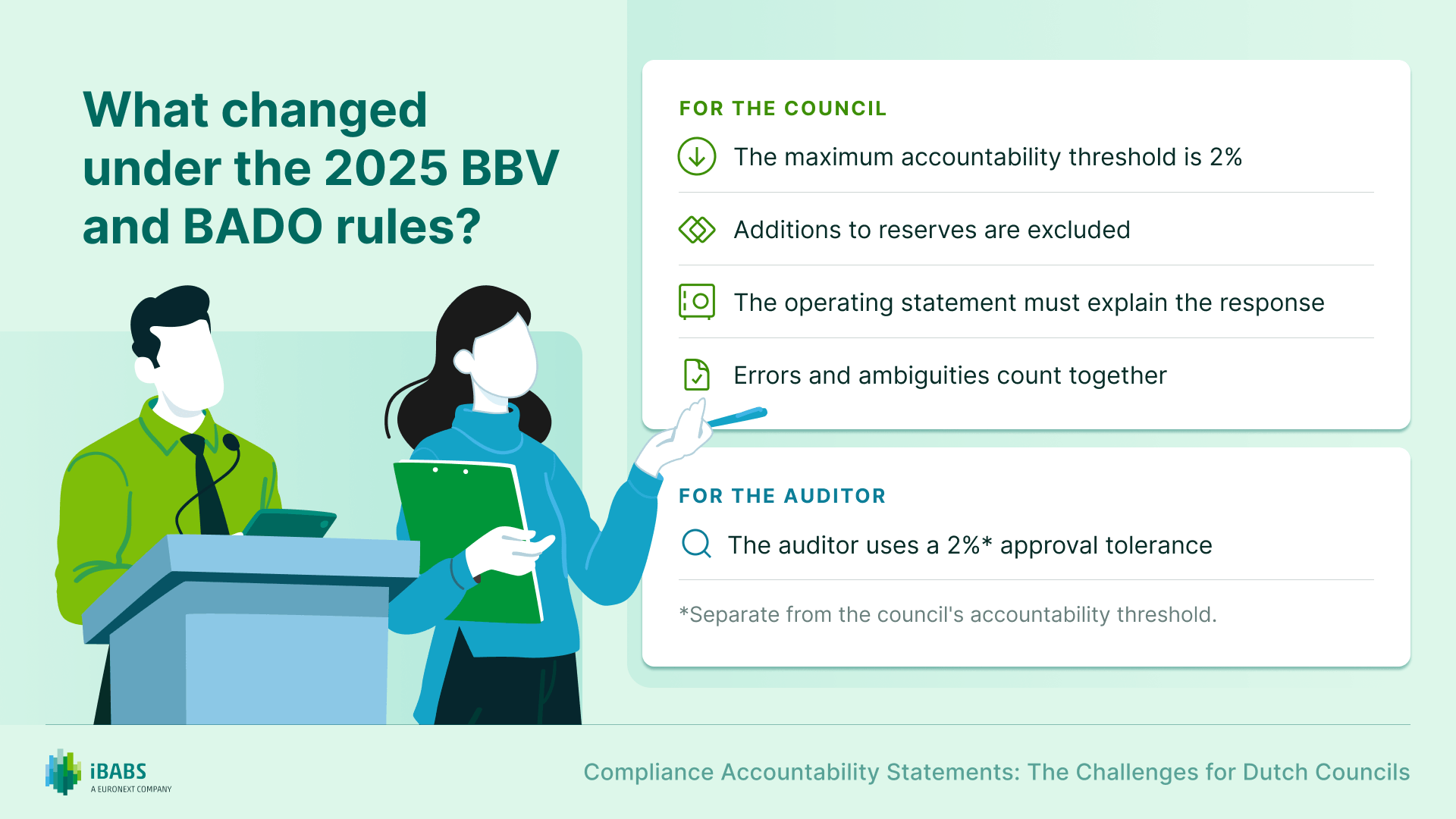
Since the 2023 financial year, under Wet versterking decentrale rekenkamers, Dutch municipalities have been obliged to include a statement in their annual accounts explaining whether their income, spending and balance-sheet transactions followed the relevant financial rules.  However, only 37% of the Dutch municipalities assessed in a 2025 report concluded that their financial activities were compliant, down from 45% the previous year. The same research found that none of the 86 municipalities studied used the required accountability model correctly: These findings suggest that the compliance accountability statement for local government has exposed weaknesses in financial controls, procurement, budget management and the...

How to Measure Community Engagement Effectively

The Organisation for Economic Co-operation and Development (OECD) found that having a say over the actions of governing bodies increases trust in those bodies by 3.1%. However, less than half of Dutch citizens (39%) believed they were able to contribute to decision-making.  The current status of participation in Dutch municipalities is mixed. For example, in Leiden in South Holland, around 10% of citizens engage in decision-making. However, this tends to skew towards residents from wealthy neighbourhoods.  To increase engagement, the Dutch government has introduced laws, such as: Whilst citizen participation brings the benefits of a more trusting and constructive relationship...

Participation Regulation 2027: What Dutch Councils Must Prepare

Civic participation can be beneficial to both residents and municipalities and other public bodies. The European Commission reports that it can improve resource efficiency and build transparency, whilst fostering “inclusivity, ensuring that all voices are heard in decision-making processes. It builds public trust in government institutions by providing residents with the opportunity to directly influence decisions that affect their lives.” However, there is evidence that many citizens do not engage in the democratic process. In the municipality elections in 2026, turnout stood at 53.75% of eligible voters. Nearly half of the electorate did not vote, despite the outcome having a...

4 Community Engagement Best Practices for Greater Impact

In its 2025 Report on Citizen Engagement and Participation and Local Governance in Europe, the European Association for Local Democracy (ALDA) examined the importance of government bodies working together with community members. It states that “effective local governance and meaningful citizen engagement are essential to ensuring that democratic systems remain responsive, inclusive and trusted.”  This is especially relevant when, as the EU’s Community Research and Development Information Service (CORDIS) reports, “In Europe, there is growing disaffection and a lack of trust in democratic processes, driven by widening inequalities and anxieties concerning social, economic and cultural change.”  CORDIS quotes James Scott,...

Complete Guide: How to Improve Accountability in Local Government

A 2024 Local Government Information Unit (LGIU) survey of English citizens found that only 43% trusted local councillors to work in the best interests of local people and that 62% wanted greater insight into how councils took decisions. These results feed into each other. The more we know about the processes involved in converting our local taxes into services for the community, the more we can trust those processes are carried out with the right intentions.  Transparency over decision-making and service delivery allows the public to hold local government organisations accountable for their actions. In turn, this encourages councillors to...

Popular posts

iBabs Meeting Assessment
envelope

iBabs Meeting Insights

Join over 24,000 professionals on the Meeting Insights email list to get updated to the latest on meeting management. All our tips and tricks delivered to your inbox.