
iBabs’ State of Meeting Management Report found that stakeholders within large corporations spend a large proportion of their time in meetings. In fact, 76% of attendees in these businesses were in meetings for more than two days a week in total. With this commitment, it is essential that these meetings are worth your team’s time and that they are productive.
This is especially important when meetings involve your executive team. Your senior leaders are key to the strategic success of your business and you must use their time efficiently, gaining the benefit of their expertise and experience through well-structured and administered meetings. And the key to a successful meeting is preparation.
This article provides an executive meeting agenda template and tips for how to create a running order that helps you achieve your goals and utilises the C-Suite’s expertise most effectively.
Key takeaways
Meeting agenda, annual plan, board resolution and more templates to use in your meetings
- Clear, focused agendas help executive teams stay aligned, make informed decisions and avoid wasting time in unproductive meetings.
- Manage the time given to each agenda item, prioritising those that will be of most value to the business.
- Use meeting agenda templates to create effective running orders for executive meetings.
- Don’t overload agendas, as this can take up too much of your executives’ time during the meeting and in unnecessary preparation.
- Distribute your agenda early to executives to give them time to research the topics and develop a viewpoint.

How to write an executive meeting agenda
An executive agenda is a running order for a meeting attended purely by your executive team. As such, it shares some elements with regular meetings within your organisation.
| Element | Explanation |
| Meeting title and details | Give your meeting a title so that it is easy to search for in the future. It might be as simple as “Weekly Executive Meeting 9/9/25.” Ensure you also note the time, date and location of the meeting, as well as whether there was the option to join via video conferencing. |
| Attendees and roles | Note who attended the meeting and whether they played a role in the meeting other than simply participating in the conversation. |
| Agenda items with time allocations | List each item for discussion during the meeting, including any decisions that the executive team needs to make. Set time limits for each piece of business to ensure you maintain focus and do not impinge on the C-Suite’s schedules for longer than necessary. |
| Supporting documents | Attach any relevant reports or other documentation that is pertinent to the items on the order of business. This helps the attendees prepare for the meeting in full knowledge of the topics for discussion. |
| Welcoming remarks | The meeting chair should open the meeting with a short introduction to set the scene and lay out the objectives of the meeting. |
| Review of action items | Look at the action items created during previous meetings and provide an update on progress towards completing them. This injects accountability into the process. |
| Approval of the previous meeting’s minutes | Approve the meeting minutes taken during the previous meeting before you move on to the new business in this executive meeting. |
| Closing summary | The chair should recount the decisions taken during the meeting and the action items derived from them before closing the meeting. |
There will also be elements that are unique to meetings of executives. These might include:
- Business updates on financials, non-financial performance (including ESG), progress towards meeting KPIs, developing risks and risk management processes.
- Discussion of strategic initiatives and the projects related to achieving the company’s long-term goals.
- Operational updates and deep-dive reviews to allow the team to understand and evaluate challenges, learn about new developments and make informed decisions to drive efficiency and improvements.
- Sensitive commercial decisions, relating to matters such as in-development products, supplier negotiations, the development of pricing strategies and similar. Some of these topics may also arise in an executive session within a regular board meeting.
- Crisis management. In the event of an emergency, the executive team might meet to discuss how to handle the response to the situation.

Executive meeting agenda template examples
Here are some examples of how an executive meeting agenda would look for different types of meeting.
Weekly executive meeting agenda
Company Name: EuroTech Innovations Ltd.
Date: Tuesday 9 September 2025
Time: 09:00 – 10:30 CET
Location: Boardroom / iBabs video conferencing
Chair: Anna Keller – CEO
Attendees & Roles
- Anna Keller – CEO (Chair)
- Luca Moretti – CFO
- Sophie Dubois – COO
- Martijn van Dijk – CTO
- Elena Petrova – Chief Human Resource Officer
- David Lemoine – Executive Assistant (Minutes)
Agenda Items
| Time | Agenda item | Lead | Supporting documents |
| 09:00 | Welcoming remarks and agenda overview | CEO – Anna Keller | Agenda PDF |
| 09:05 | Review of action items from previous meeting | Executive Assistant – David Lemoine | Action tracker report |
| 09:15 | Approval of previous meeting minutes (2 September 2025) | CEO | Minutes document |
| 09:20 | Operational updates: KPIs, challenges, team news | COO – Sophie Dubois | Weekly ops report |
| 09:35 | Finance update: Budget vs. actual, cash flow, risks | CFO – Luca Moretti | Finance dashboard |
| 09:50 | Technology: Project timelines, risks, roadmap review | CTO – Martijn van Dijk | Development roadmap and risk log |
| 10:05 | HR update: Staffing, recruitment, employee engagement | Head of HR – Elena Petrova | HR metrics snapshot |
| 10:20 | Any Other Business | All | N/A |
| 10:25 | Summary of decisions and new action items, confirm ownership and deadlines for tasks, reminder of next meeting: Tuesday 16 September 2025 at 09:00 CET | CEO | N/A |
| 10:30 | Close the meeting | CEO | N/A |
Monthly executive meeting agenda
Company Name: EuroTech Innovations Ltd.
Date: Monday 6 October 2025
Time: 09:00 – 10:30 CET
Location: Boardroom / iBabs video conferencing
Chair: Anna Keller – CEO
Attendees & Roles
- Anna Keller – CEO (Chair)
- Luca Moretti – CFO
- Sophie Dubois – COO
- Martijn van Dijk – CTO
- Elena Petrova – Chief Human Resource Officer
- David Lemoine – Executive Assistant (Minutes)
| Time | Agenda item | Lead | Supporting documents |
| 09:00 | Welcoming remarks and overview of the agenda | CEO – Anna Keller | Agenda PDF |
| 09:05 | Review of action items from previous monthly meeting | Executive Assistant – David Lemoine | Action tracker report |
| 09:15 | Approval of previous meeting minutes (8 September 2025) | CEO | Minutes document |
| 09:20 | Strategic priorities update: progress, blockers, cross-department insights | CEO | Strategy scorecard |
| 09:35 | Operational performance deep dive: KPIs, department alignment | COO – Sophie Dubois | Ops dashboard |
| 09:50 | Financial overview: YTD budget, forecasts, risk exposure | CFO – Luca Moretti | Financial overview pack |
| 10:10 | Technology status: key project updates, innovation initiatives | CTO – Martijn van Dijk | Product roadmap, R&D summary |
| 10:25 | People and culture report: engagement trends, DEI, succession planning | Chief Human Resource Officer – Elena Petrova | HR insights report |
| 10:40 | Regulatory and compliance matters | CFO | Compliance update report |
| 10:50 | Any Other Business | All | N/A |
| 10:55 | Summary of decisions and new action items, confirm deadlines | CEO | N/A |
| 11:00 | Close the meeting | CEO | N/A |
Strategic executive meeting agenda
Company Name: EuroTech Innovations Ltd.
Date: Wednesday 24 September 2025
Time: 09:00 – 10:30 CET
Location: Boardroom / iBabs video conferencing
Chair: Anna Keller – CEO
Attendees & Roles
- Anna Keller – CEO (Chair)
- Luca Moretti – CFO
- Sophie Dubois – COO
- Martijn van Dijk – CTO
- Elena Petrova – Chief Human Resource Officer
- David Lemoine – Executive Assistant (Minutes)
| Time | Agenda item | Lead | Supporting documents |
| 09:00 | Welcoming remarks and purpose of the strategic meeting | CEO – Anna Keller | Strategic agenda PDF |
| 09:10 | Review of strategic goals: progress toward 2025 targets | CEO | Strategy performance dashboard |
| 09:30 | Market trends and competitive analysis: implications for our positioning | COO – Sophie Dubois | Market insight report |
| 09:50 | Long-term financial planning: 3-year forecasts and investment priorities | CFO – Luca Moretti | Financial forecast and investment proposals |
| 10:15 | Break | — | — |
| 10:30 | Innovation and digital transformation roadmap | CTO – Martijn van Dijk | Technology strategy deck |
| 10:50 | Talent and leadership development: succession planning and culture-building initiatives | Head of HR – Elena Petrova | Talent strategy document |
| 11:15 | Key risks and scenario planning: regulatory, geopolitical and operational | CFO | Strategic risk register |
| 11:35 | Alignment on 2026 strategic priorities and next steps | CEO | Draft 2026 objectives |
| 11:55 | Summary of agreements, action owners and next review timeline | CEO | N/A |
| 12:00 | Close the meeting | CEO | N/A |
Crisis executive meeting agenda
Company Name: EuroTech Innovations Ltd.
Date: Wednesday 1 October 2025
Time: 09:00 – 10:30 CET
Location: Boardroom / iBabs video conferencing
Chair: Anna Keller – CEO
Attendees & Roles
- Anna Keller – CEO (Chair)
- Luca Moretti – CFO
- Sophie Dubois – COO
- Martijn van Dijk – CTO
- Elena Petrova – Chief Human Resource Officer
- Eric Blanc – Legal Counsel
- David Lemoine – Executive Assistant (Minutes)
| Time | Agenda item | Lead | Supporting documents |
| 08:30 | Opening remarks | CEO – Anna Keller | Emergency agenda PDF |
| 08:35 | Summary of the crisis situation (nature, impact, timeline so far) | COO – Sophie Dubois | Incident report and timeline |
| 08:45 | Financial implications and immediate risk assessment | CFO – Luca Moretti | Financial exposure snapshot |
| 09:00 | Technology impact assessment and business continuity update | CTO – Martijn van Dijk | IT risk log and recovery plan |
| 09:15 | HR and communications: staff safety, internal messaging, stakeholder updates | Chief Human Resource Officer – Elena Petrova | Internal comms draft and HR brief |
| 09:30 | Response plan: roles, responsibilities and next 24 to 48 hour actions | CEO | Draft action tracker |
| 09:50 | Media, legal and regulatory considerations | CEO / Legal Counsel | Holding statements / regulatory checklist |
| 10:00 | Close and next scheduled crisis review meeting | CEO | N/A |
Download executive meeting agenda template
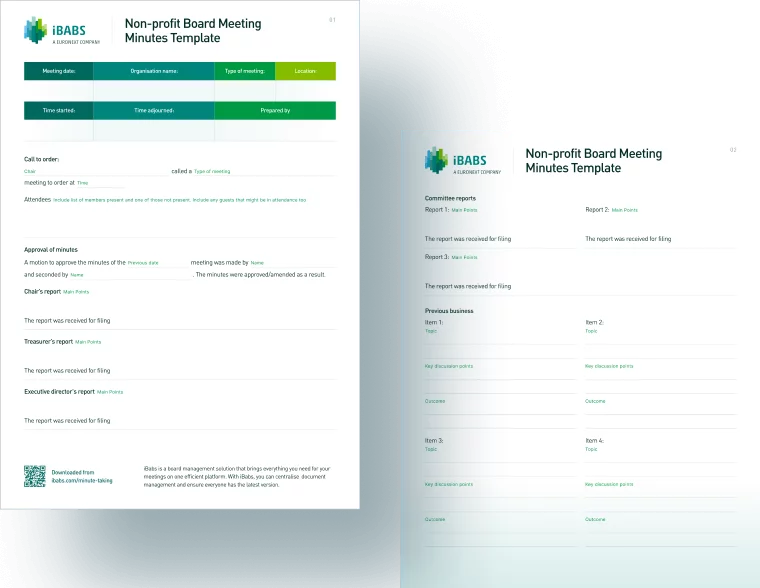
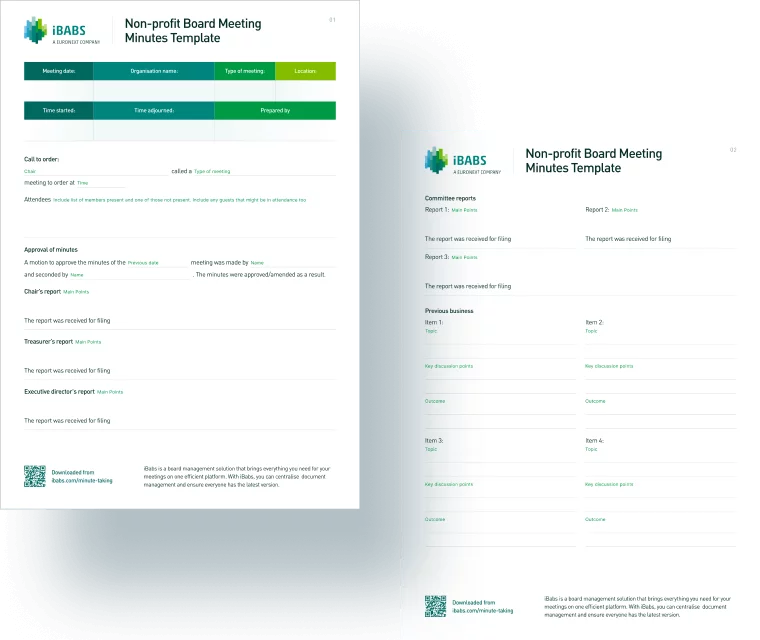
Find our collection of meeting agenda templates, including one for executive meetings. Simply download the agenda template of your choice and fill in the blanks to create an effective running order for your meeting.
Meeting agenda, annual plan, board resolution and more templates to use in your meetings
Best practices for agenda planning and distribution
- Set your agenda in good time and distribute it early to give busy executives time to read through, consider the contents and develop their thoughts ahead of the meeting. This leads to better informed discussion and decision-making.
- Gather input from stakeholders as to what is important to discuss at your next meeting. You only have limited time with all your senior leaders in the same meeting, so make sure you streamline the topics to ensure they all add value to the business.
- Set expectations for the meeting and be clear about its purpose and objectives. This helps focus the attention of your attendees and gives them a reason why the meeting will be worth the time they spend in it.
- Send out supporting documents with your agenda to help your executives understand the topics more deeply and guide their research.
- Prioritise agenda items by the impact they have on the organisation. Deal with the most important first, working downwards. This ensures that you deal with all the critical business before you run out of time.
- Allocate time blocks smartly, with reference to the complexity of a topic or with consideration to the different viewpoints it might spark. For example, if there is a matter that requires deep technical understanding or a controversial topic to discuss, this might require a larger section of the meeting than a more straightforward item of business.
- Balance strategic and operational discussions in regular executive meetings to gain the expertise of your executive team across a range of topics pertinent to the success of the business in the short, medium and long terms.
Common pitfalls and how to avoid them
- Overloading the agenda: Prioritise the high-impact topics for the business at that moment and in the future, limiting the number of overall agenda items and being realistic about what you can cover in the time allotted. Defer non-urgent matters to the next meeting or to a subcommittee.
- Failing to assign clear objectives: Clearly state the intended outcome for each agenda item so that it is clear what is expected at each stage of the meeting. This helps with better targeted preparation.
- Lack of follow-up on actions: Hold a review of previous action items in each meeting to update the team on their progress. You can also designate actions through a board portal like iBabs, which uses a traffic light system to show the ongoing progress of action items, implementing accountability into the process.
- Ignoring time constraints: Be realistic about what you can fit into a meeting and how long it will take. Assign a timekeeper to help the charity stick to schedule. Your executive team’s time is precious and you should respect that. If necessary, schedule a follow-up session or workshop to tackle matters that are in danger of taking up too much meeting time.
FAQ
Who sets the agenda for executive meetings?
The CEO typically sets the agenda, often in collaboration with senior leaders or the executive assistant, ensuring it reflects strategic priorities and urgent operational matters.
Ideally, the agenda should be shared at least 48 to 72 hours in advance to be relevant, but also give attendees time to prepare and review any supporting materials.
What is the ideal length of an executive meeting?
A well-structured executive meeting typically lasts between 60 and 90 minutes, though monthly or strategic sessions may extend longer, depending on the complexity of the agenda items.
Conclusion
It is essential that you make the most of your executive team meetings, and the agenda is key to an efficient and effective process. Your C-Suite contains experience and expertise that is key to the success of your business, so ensure you make the most of their time and create a running order that aligns with your business priorities and the most pressing risks in the market. Give them time to prepare their contributions and the resources to make the best possible decisions, using an executive meeting agenda template to help.
iBabs is a board portal that runs all aspects of your meetings from agenda creation and distribution to follow-ups. Everything takes place in the cloud, allowing executives access wherever and whenever they need it. If you want to see how it will work for your business, request a demo today.

