
The government of the Netherlands is currently implementing a range of reforms to improve transparency and accountability in government. From Wet digitale overheid (Wdo) creating standards for digital interaction and Wet open overheid (Woo) dictating which materials governing bodies should make public to Wet hergebruik overheidsinformatie (Who), which demands that bodies must hold public information in an accessible format to allow other organisations to reuse it for other purposes.
This ongoing government digital transformation may lead to an increased burden when carrying out processes within your council. The need to produce documentation in a timely manner, in the correct format, with the necessary redactions and anonymisation and published at the right time will require significant adjustments to workflows.
This is not just an isolated act within the Netherlands; The Berlin Declaration on Digital Society and Value-based Digital Government in 2020 focused public sector organisations across the European Union on creating a digital sphere built on accessibility and inclusion for all citizens.
This article explores how digitisation will affect governance, how the regulatory framework is changing across the Netherlands and how you can improve governance with digital tools.
Key takeaways
- Dutch public bodies are moving from document-driven to data-driven governance.
- New laws like the Wet digitale overheid (Wdo) and Wet open overheid (Woo) make transparency a structural requirement.
- Effective transformation depends on collaboration platforms, digital skills and robust decision-management tools.
- Success means faster, clearer, more inclusive decision-making.
- Digital transformation forces councils to treat information management, security and open data as core governance disciplines, not back-office IT concerns.
- Building digital skills and ethical awareness among officials is essential to ensure new tools strengthen, rather than undermine, public trust.
What digital transformation means for governance in practice
Although digitisation in governance is not new, this current push away from paper processes and towards digital governance requires government bodies to make workflow changes as a matter of law, rather than for simple convenience. Ministries, municipalities and councils must not only create digital agendas and meeting minutes, for example, they must also ensure that there is a clear, streamlined process to then publish them in a publicly accessible location.
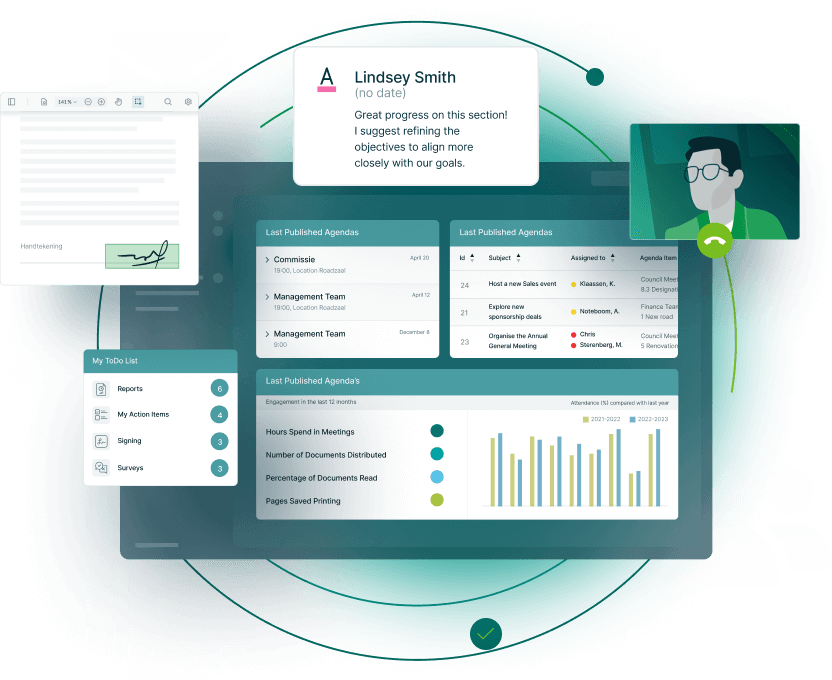
This requires strong document management that uses the required formats and automates publication so that the government body meets its obligations. Many organisations use meeting portals to keep the whole meeting ecosystem within one, cloud-based location. This creates a workflow that looks like this:
- Create the agenda within the portal.
- Distribute the agenda and meeting papers to members, directly into their user accounts.
- Allow members to annotate, discuss and collaborate on the content of the agenda and meeting papers, as well as approving the previous meeting’s minutes before the next meeting.
- Meeting attendees use the portal within the meeting to search papers, cite relevant passages and vote.
- Remote participants join through the portal’s video conferencing tool.
- After the meeting, create the minutes and distribute them to users’ accounts.
- Publish relevant documents to your public portal as soon as is necessary under Woo.
The key is to ensure you use a secure system with access control to manage your centralised archives. This keeps the data held within safe whilst allowing you to meet your disclosure obligations at the same time.

In this fast-paced world, you need a meeting management solution that is simple, efficient, and incredibly easy to use. With iBabs, you can manage the entire meeting process on a single platform.
The legal and policy framework behind Dutch digital governance
| Law | Purpose | Key elements relevant to governance |
| Wet digitale overheid (Wdo) | Framework for a secure, reliable digital government, including e-identification and digital infrastructure for public bodies. | Requires secure digital access for citizens and organisations using approved electronic ID (eID)Mandatory use of open standards and information security baselinesTrusted digital channels/portals for formal communication and documents. |
| Wet open overheid (Woo) | Transparency law to strengthen the public’s right of access to government information and processes | Active disclosure of specified categories (including meeting agendas, documents, minutes and decisions of councils and other public bodies)Obligations to handle information requests (Woo-verzoeken) within strict deadlinesDuty to maintain a good information management system so documents are easily accessible. |
| Wet hergebruik van overheidsinformatie (Who) | Governs how existing public sector information can be reused by citizens and businesses. | Public information that is already accessible must, on request, be provided in machine-readable, reusable formats, unless an exception appliesNon-discriminatory, transparent conditions and limited charging for re-useEncourages publication of datasets and documents as open data (including, potentially, meeting outputs). |
Strengthening governance through digital tools
- Collaboration and decision-making platforms like iBabs pull all meeting agendas, minutes, documents, voting records and action items into one central environment, rather than across scattered inboxes and drives. This becomes the single source of truth, with controlled access assigned by role, audit trails and instant publication. These tools promote transparency and help you achieve compliance.
- Financial and operational accountability is shifting into the digital realm. With the explosion of cloud-based tools for governance, it is essential to deploy the right tools at the right price. Do your digital platforms offer measurable public value? By applying the principles of FinOps, you can maintain an overview of spend for each project or programme to prove that they are tied directly to improved governance outcomes. It also allows you to maintain high-quality disclosures and recordkeeping, whilst uncovering cost savings, too.
- Data ethics and trust are essential to the aim of improving transparency in governance. The City of Amsterdam already runs an Algorithm Register to show where and why algorithms are used by the body, helping citizens understand and even contribute to improve them. Combining tools like this with AI impact assessments, ethical oversight boards and targeted digital literacy programmes helps your organisation embrace the benefits of AI and analytics in a responsible manner.
Real-world examples of digital governance in the Netherlands
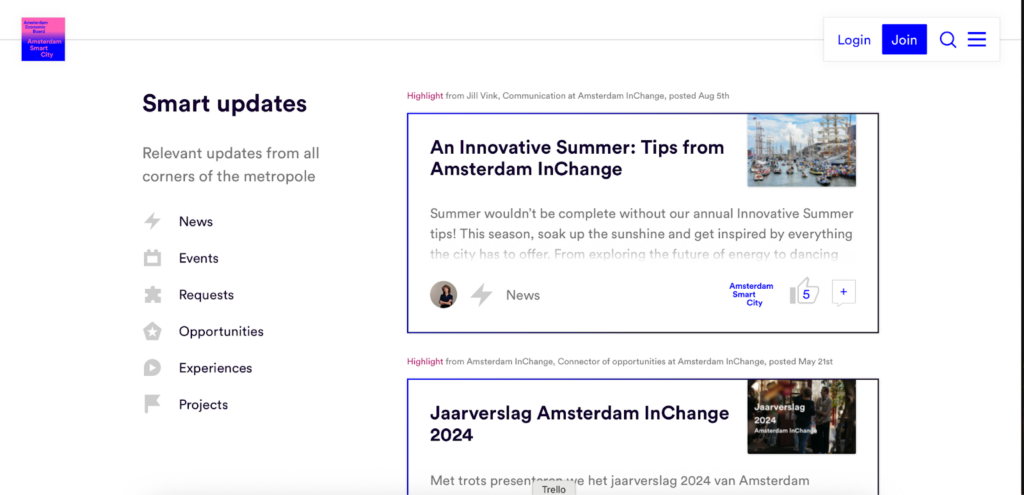
Amsterdam InChange was formerly known as Amsterdam Smart City and provides an open governance platform using smart technology to solve urban challenges with the help of public and private partners, as well as citizen engagement. This allows it to speed up problem-solving and create solutions that work for all parties, based on the experiences they share.
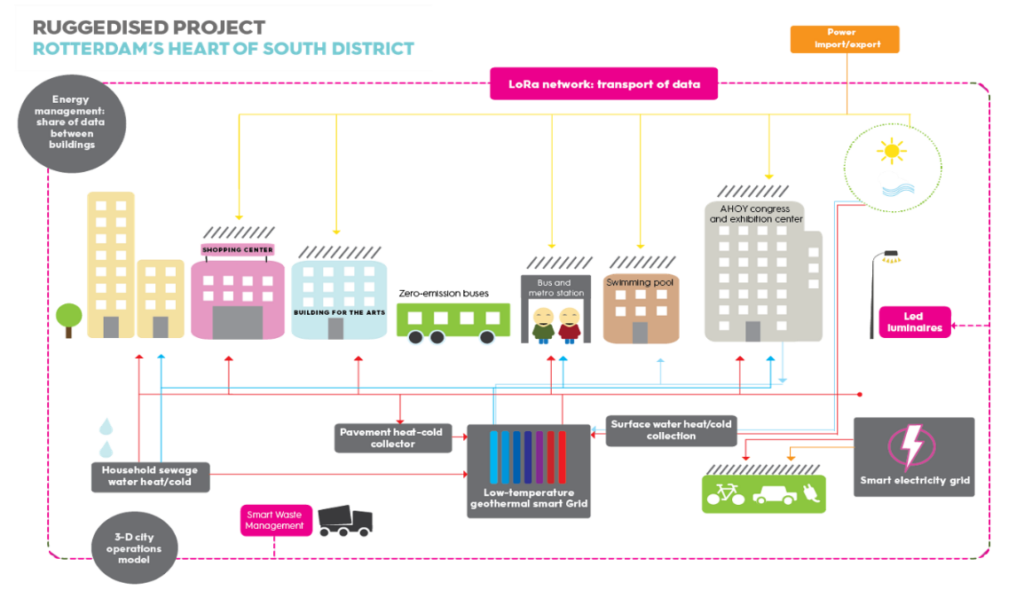
Rotterdam created a digital twin of the city, a smart 3D model that represents the physical space and which uses sensors and data streams from around the town to help monitor how the city works and where it can improve. Using data analysis and AI, decision makers can predict the impact of projects. Rotterdam is also able to model the changes that locally designed applications would have on local communities, encouraging citizen input.
The human side of digital transformation
To be able to serve citizens in an open and transparent manner, digital literacy is essential at all levels of local government. These laws require councils to move away from paper processes and meet specific requirements in their digital communication. With such a change, it is likely that there will be some resistance at first. Here are some of the challenges your organisation might face:
| Challenge | Solution |
| Adoption resistance | Involve councillors and officers early, provide role-based training, discuss the regulatory need to move to digital processes and encourage leaders to show support for the move. |
| Information overload | Standardise templates to make the process easier and provide concise summaries so members can see what needs their attention first. |
| Cybersecurity concerns | Choose accredited, secure platforms, enforce strong access controls and MFA and run regular awareness training linked to real council scenarios. |
| Legacy systems and fragmentation | Map existing tools, rationalise where possible and integrate core systems into a single trusted platform for meetings and documents. |
| Budget constraints | Build a business case that links digital tools to time saved, reduced printing and travel costs and better compliance to justify investment. |
Run pilot projects to show how the new workflows fit into your processes and to alert you to any issues that require refining. Keep communication clear throughout the organisation to ensure that any problems are dealt with as soon as possible.
Measuring success: Governance outcomes that matter
There are a number of ways to measure whether your digital governance processes are working as they should. These include:
- Faster document turnaround from creation to distribution to publishing
- Greater meeting efficiency, in terms of agenda items discussed, voted on and followed up
- Fewer compliance issues in relation to these digital transparency laws
- Fewer Woo requests for disclosures, showing that your data is accessible and comprehensive so the public can find what they need easily
- Greater transparency to the public achieved. Send out surveys to citizens to garner feedback on your efforts and whether they believe they are able to understand more clearly the workings of local government.
Monitor your progress and report back to stakeholders, sharing results and plans to improve delivery in the short and long terms.
FAQ
What are the key benefits of using digital meeting tools for governance?
They centralise agendas, papers, decisions and actions in one secure place, reducing admin, improving compliance and making it easier for leaders to focus on making better decisions.
How does digital transformation improve transparency and citizen trust?
It enables timely publication of clear, accessible information about meetings and decisions, showing how choices are made and making public bodies visibly more open and accountable.
Where should public bodies start with their digital transformation journey?
Begin with a secure meeting and document platform, tidy information management practices and clear roles and training so people can use the new tools confidently from day one.
Conclusion
Digital transformation is a legal requirement for Dutch government bodies, but it also helps them serve citizens more effectively. Rather than seeing the new laws as a burden, consider it an opportunity to streamline the way you run meetings, carry out citizen engagement and make important information accessible to the public.
Using iBabs, you can create effective meetings, manage governance processes securely and then publish the relevant documents to your public portal in a Woo-compliant and accessible manner. Request a demo today to find out how iBabs can help your organisation.

